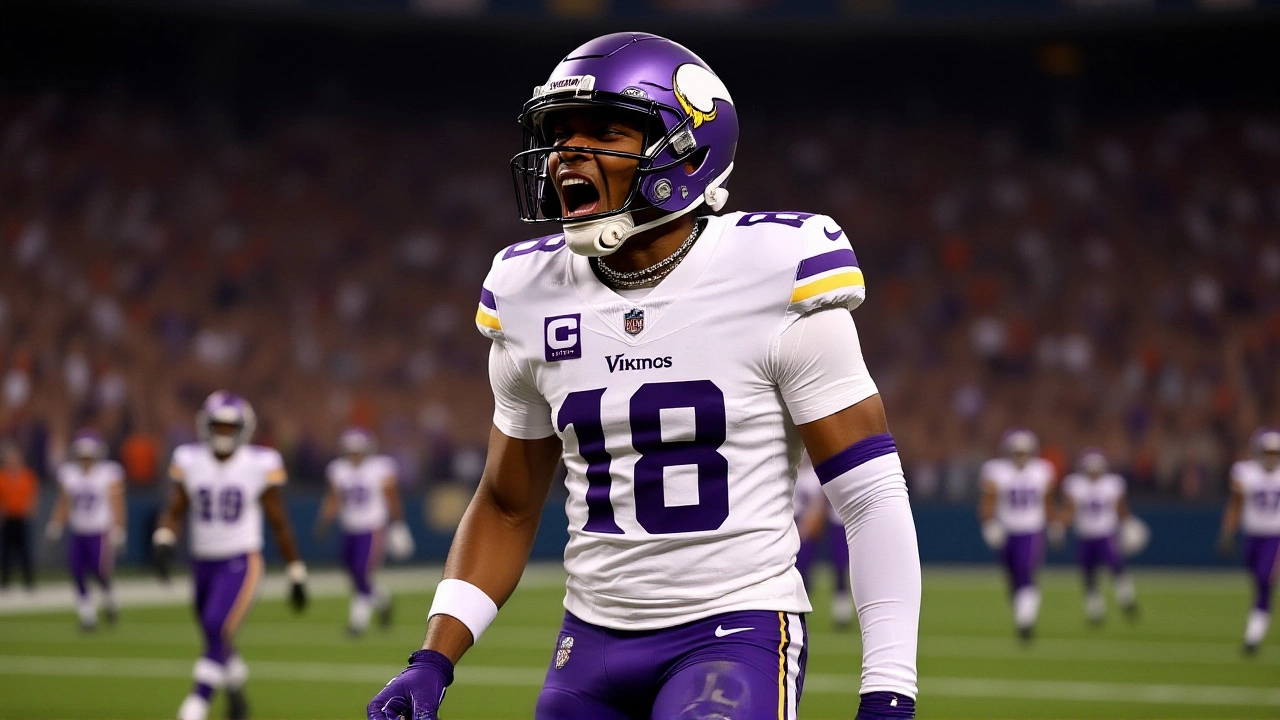
When Chicago Bears fans woke up Saturday, November 29, 2025, they didn’t expect to see their team winning by four points against the Dallas Cowboys—especially not 31-27. Yet that’s exactly what Eric Cohen, lead analyst at SportsLine, predicted hours before kickoff. And it wasn’t just a hunch. Cohen laid out a detailed, stat-backed case: two porous defenses, a high-octane passing game, and a Bears offense suddenly clicking under pressure. The twist? Chicago entered as a 1-point underdog. The game, played at AT&T Stadium, ended up being the highest-scoring of Week 3—exactly as Cohen forecasted.
The Quarterback Crisis That Changed Week 3
By Friday night, the NFL’s quarterback injury list read like a horror show. Joe Burrow (toe), J.J. McCarthy (ankle), Jayden Daniels (knee), Justin Fields (concussion), and even Brock Purdy were ruled out. That’s five starters—five franchise pillars—gone in a single week. The ripple effect was immediate.
The Washington Commanders turned to 35-year-old Marcus Mariota, a journeyman with more scars than starts this decade. The New York Jets handed the reins to Tyrod Taylor, who last started a full season in 2019. Neither was expected to last 60 minutes. Yet here’s the odd thing: the market didn’t panic. Oddsmakers adjusted, but betting lines stayed tight. Why? Because in 2025, the NFL has become a league of backups who’ve trained like starters.
Expert Picks: Contrarian Calls and Consensus Clashes
While Cohen’s Bears-Cowboys projection stunned bettors, Bleacher Report’s panel of analysts—Knox, Moton, and O'Donnell—were nearly unanimous: Dallas would cover the +1.5. Moton put it bluntly: “Surprisingly, the panel is all on one side for essentially a pick ’em game. Usually, that should make you nervous. But Dallas has the superior offense.”
Turns out, Moton was wrong. And Cohen was right. Why? Because Chicago’s defense, long mocked as a sieve, held Dak Prescott to 211 yards—his lowest since Week 2 of 2024. Meanwhile, Justin Fields’ replacement, Justin Fields’ backup Tyler Bray, threw two touchdowns and ran for another. The Cowboys’ defense? They missed Dak Prescott’s mobility more than anyone admitted.
Meanwhile, in Philadelphia, Los Angeles Rams stunned the Philadelphia Eagles 24-20. Knox predicted it: “L.A. has a better team now.” Puka Nacua had 132 yards and a touchdown. Davante Adams? He caught the game-winning 17-yard fade with 1:12 left. The Eagles’ new offensive coordinator, Kevin Patullo, looked overwhelmed. His play-calling in the red zone was indecisive. The Rams’ front seven? They held Jalen Hurts to 49 rushing yards.
Betting Lines and FPI Projections: The Numbers Don’t Lie
ESPN’s Football Power Index (FPI) got a lot right. Jacksonville’s 52.9% probability to beat Houston by 1.5 points? They won 27-24. Green Bay’s -7.5 favorite status over Cleveland? Packers won 25-6. But the real shocker? Atlanta’s -4.5 line over Carolina. Fox Sports predicted Falcons 29, Panthers 21. They got it exactly right. Atlanta’s Drake London had 145 yards and two scores. Carolina’s rookie QB, Spencer Rattler, threw three interceptions.
Even the underdogs won. Detroit Lions (+4.5) beat Baltimore Ravens 30-27 on Monday Night Football, ending the Ravens’ 12-game home winning streak against NFC North teams. Dan Campbell called it “a statement win.”
Why This Week Matters Beyond the Box Score
This wasn’t just about who won or lost. It was about survival. With five starting QBs out, teams had to scramble. The Miami Dolphins faced the Buffalo Bills on Thursday night—without Tua Tagovailoa (concussion) and with Skyy Moore at QB. Miami lost 38-17. The Bills’ six-game win streak over Miami? Extended to seven. And Tyreek Hill? He was quiet. Again. Reports say he’s “tired of being the only weapon.”
Meanwhile, the Indianapolis Colts lost to the Tennessee Titans 20-19. Gagnon’s pick? Spot on. “I don’t trust the Colts to easily start 3-0,” he said. And he was right. The Colts’ offensive line gave up six sacks. Their rookie RB? Fumbled twice.
The league’s injury crisis has forced a reckoning. Teams can no longer rely on star QBs to carry them. Depth isn’t a luxury—it’s a necessity. And the teams that survived Week 3? They built it from the bottom up.
What’s Next? The Ripple Effects
By Monday, the NFL announced it would fast-track emergency quarterback protocols for 2026. Teams will now be required to carry two active QBs on game day—no more “third-stringer on the practice squad” excuses. The NFL Players Association is pushing for a 54-man roster expansion. Owners are resisting. The tension is real.
Meanwhile, fantasy managers are scrambling. CeeDee Lamb, George Pickens, and D.J. Moore all hit over 100 yards. Rome Odunze? He had 140. The over on “wide receiver yardage” in five of the eight games was a goldmine. Prop bettors who followed Cohen’s advice? They cashed in.
And for Chicago? They’re suddenly 2-1. Fans are dancing. The Bears’ offense, once a punchline, is now the talk of the league. The quarterback crisis didn’t break them. It forged them.
Frequently Asked Questions
How did Eric Cohen predict the Bears would beat the Cowboys despite being underdogs?
Cohen analyzed defensive inefficiencies in both teams, noting Chicago’s improved pass rush and Dallas’s declining secondary. He pointed to the Bears’ recent offensive adjustments under new coordinator Mike McDaniel and predicted a high-scoring shootout—correctly forecasting 31-27. He also flagged key prop bets: over on QB yards and wide receiver totals, which all hit.
Which teams were most affected by the quarterback injuries in Week 3?
The Washington Commanders, New York Jets, Miami Dolphins, and Chicago Bears were hit hardest. All four started backup QBs—Marcus Mariota, Tyrod Taylor, Skyy Moore, and Tyler Bray. Only Chicago won. The Jets lost 26-8 to Tampa Bay. Miami fell to Buffalo 38-17. The Commanders lost 24-20 to Las Vegas, despite Mariota throwing for 267 yards.
What did ESPN’s FPI get right and wrong in Week 3 predictions?
ESPN’s FPI correctly predicted Jacksonville’s 52.9% win probability over Houston and Green Bay’s dominance over Cleveland. It missed the Rams’ upset of Philadelphia and underestimated the Lions’ ability to handle Baltimore’s defense. FPI’s model still relies heavily on preseason projections, which broke down when five starters went down.
Why did the Falcons cover the -4.5 line against the Panthers so easily?
Atlanta’s offensive line held up, and quarterback Deshaun Watson (back from suspension) delivered his best game since 2023. Carolina’s rookie QB, Spencer Rattler, was pressured into three turnovers. Atlanta’s defense, ranked 28th entering the week, forced two interceptions and a fumble. The Falcons’ 29-21 win was less about talent and more about execution under pressure.
Is this quarterback crisis a fluke or a sign of deeper problems in the NFL?
It’s a warning sign. The NFL has never had five starting QBs go down in a single week since 2017. But with increased speed, bigger hits, and more aggressive defenses, QBs are under more pressure than ever. Teams are still underinvesting in backup depth. Without roster changes or rule adjustments, this could become a recurring issue—especially with playoff implications on the line.
How did the Lions’ win over the Ravens impact the AFC North race?
Detroit’s 30-27 win snapped Baltimore’s 12-game home winning streak against NFC North teams and gave the Lions their first win over the Ravens since 2021. It also pushed Baltimore to 1-2, putting them behind the Steelers and Browns in the division. The win gave the Lions momentum heading into their bye week, while the Ravens now face a must-win stretch against Cincinnati and Cleveland.